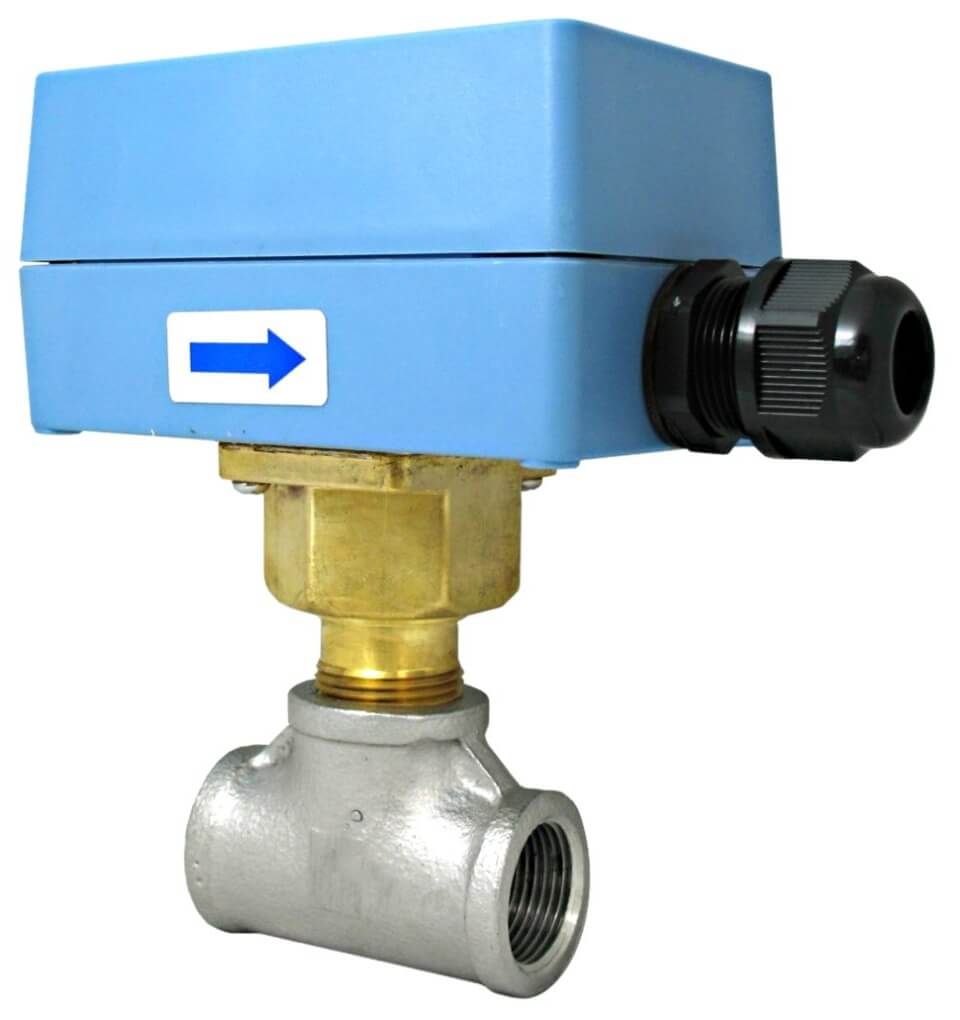

Knowing what is happening inside a process is fundamental to reliable automation.
Is liquid flowing through the pipe? How quickly? Is the tank nearly empty? Has the vessel reached its maximum level? Has flow stopped because a pump has failed? Is a level switch signalling that a refill process should begin?
Flow and level measurement answer different questions, but they are frequently connected within the same process.
Choosing the correct solution begins with understanding what information the control system actually needs.
For South African manufacturers, process plants, water-related operations, food and beverage facilities and OEM machine builders, correct flow and level measurement can support more reliable control, better maintenance and fewer unexpected process interruptions.
Flow measurement and level measurement are not the same
Flow measurement determines the movement of a medium through a process.
Level measurement determines the amount or position of material within a vessel, tank or other container.
A pump system, for example, may need both.
The tank needs level monitoring to determine whether sufficient liquid is available, while the process line needs flow monitoring to confirm that liquid is actually moving.
This means flow and level products should be considered as parts of the broader process rather than isolated instruments.
The first question: do you need switching or continuous measurement?
One of the most important specification questions is whether the process needs a simple state change or a measured value.
A flow switch may simply indicate that flow has exceeded or fallen below a defined point.
A flow sensor or meter may provide a continuous value.
Similarly, a level switch may indicate:
- Tank full
- Tank empty
- High level
- Low level
A continuous level sensor can provide a variable measurement across a range.
Choosing between these approaches depends on the process.
If the PLC only needs to know whether a tank has reached a minimum level, a point-level switch may be sufficient.
If operators need to know whether the vessel is 20%, 50% or 80% full, continuous measurement may be more appropriate.
Flow measurement for liquids
Liquid flow measurement may be used in:
- Water systems
- Cooling circuits
- Pump installations
- Process lines
- Cleaning systems
- Chemical handling
- Manufacturing equipment
- Food and beverage processing
Switches International currently carries a dedicated liquid-flow category with products including flow switches, meters and monitoring options.
Recommended Products: https://switches.co.za/product-category/flow-liquid/
When selecting a liquid-flow product, consider:
- Medium
- Minimum flow
- Normal flow
- Maximum flow
- Pipe size
- Pressure
- Temperature
- Viscosity
- Chemical compatibility
- Desired output
- Required accuracy
A solution selected for water, for example, should not automatically be assumed suitable for oil or a chemical process.
Air flow measurement
Air and gas systems have different characteristics from liquid systems.
Applications can include:
- Compressed air
- Ventilation
- Extraction
- Drying
- Cooling
- Pneumatic systems
- Process air
Recommended Products: https://switches.co.za/product-category/flow-air/
Because gases are compressible, pressure and temperature conditions can influence measurement requirements.
When discussing an air-flow application, provide the operating pressure and expected flow conditions.
Why monitor flow?
Flow information can support several functions.
Pump protection
A pump may appear to be running even when liquid is no longer moving correctly.
A flow switch can provide another layer of process confirmation.
Cooling
Cooling circuits often depend on continuous liquid movement.
Loss of flow may need to trigger an alarm or equipment response.
Process consistency
Some industrial processes rely on stable flow to maintain product or process quality.
Maintenance
Unexpected changes in flow may indicate:
- Blocked filters
- Restricted pipes
- Pump wear
- Valve problems
- Leaks
Trend changes can therefore help maintenance teams identify problems.
Understanding level measurement
Level monitoring answers questions about material inside a tank, vessel or storage system.
Common applications include:
- Water tanks
- Chemical tanks
- Process vessels
- Hoppers
- Storage systems
- Pump sumps
- Food and beverage tanks
- Bulk materials
Recommended Products: https://switches.co.za/product-category/level/
The correct sensing technology depends on the material and vessel.
Important questions include:
- Is the medium liquid or solid?
- Is it conductive?
- Does foam occur?
- Is there agitation?
- Are there vapours?
- What is the tank height?
- Is the tank pressurised?
- Is the measurement point-level or continuous?
- Is non-contact measurement preferred?
These questions should be answered before selecting the product.
Point-level detection
A level switch may be suitable where only a defined condition must be detected.
Typical examples include:
- High-level alarm
- Low-level alarm
- Pump dry-run protection
- Refill trigger
- Overflow protection
This can be simpler and more cost-effective than installing a continuous measurement device when no continuous value is needed.
Continuous level measurement
Continuous monitoring is appropriate where the actual level needs to be displayed or transmitted.
This may support:
- Inventory visibility
- Process control
- Consumption monitoring
- Production planning
- Remote monitoring
The measurement method should be matched to the vessel and media.
Combining pressure, flow and level
Some process systems benefit from multiple measurements.
A pump installation may involve:
- Tank level
- Discharge pressure
- Flow rate
Looking at these signals together can make troubleshooting easier.
If pressure rises while flow drops, there may be a restriction. If tank level is low and flow disappears, supply conditions may explain the problem.
Recommended Products: https://switches.co.za/product-category/pressure-vacuum-sensors-switches/
Signal output and PLC integration
Before selecting a sensor or transmitter, confirm how the measurement must reach the control system.
Possible requirements include:
- Switching output
- 4–20mA
- 0–10V
- Pulse signal
- Relay
- Digital communications, depending on device
The PLC input type and expected signal should be confirmed early.
Switches International’s PLC integration guidance reinforces this principle: the sensor output and control-system input need to be compatible, and connector pinouts, common references and wiring should be checked rather than assumed. Read more here.
When local displays help
A central HMI is not always enough.
Maintenance technicians may need to see process values directly at the machine.
Local displays can assist with:
- Commissioning
- Troubleshooting
- Operator checks
- Process adjustment
- Retrofit projects
Electronic display/controllers: https://switches.co.za/product-category/electronic-display-controllers/
Kappa-M Dual Input: https://switches.co.za/product/kappa-m-dual-input/
A dual-input application may be useful where two process values need to be visible together.
Common flow and level selection mistakes
Avoid:
- Selecting by pipe size alone
- Ignoring the process medium
- Forgetting minimum flow
- Ignoring pressure and temperature
- Using point-level sensing when continuous measurement is needed
- Overspecifying continuous measurement when a switch would suffice
- Selecting an incompatible electrical output
- Ignoring environmental protection
- Forgetting maintenance access
- Failing to consider connectors
South African process industries
Flow and level measurement is relevant across South African:
- Manufacturing
- Mining
- Food and beverage
- Water treatment
- Packaging
- Chemical processing
- Agriculture
- OEM machine building
Availability of technical support and replacement products can be particularly valuable in critical process applications.
Recommended products:
- Flow Air: https://switches.co.za/product-category/flow-air/
- Flow Liquid: https://switches.co.za/product-category/flow-liquid/
- Level: https://switches.co.za/product-category/level/
- Pressure/Vacuum: https://switches.co.za/product-category/pressure-vacuum-sensors-switches/
- Display Controllers: https://switches.co.za/product-category/electronic-display-controllers/
- Kappa-M: https://switches.co.za/product/kappa-m-dual-input/
FAQs
What is the difference between a flow switch and flow meter?
A switch generally provides a defined state or alarm point, while a meter provides a measured flow value.
When should a level switch be used?
A level switch is useful where the system only needs to detect a specific level, such as full, empty, high or low.
What information is needed for flow sensor selection?
Provide medium, flow range, pipe size, pressure, temperature, output requirement and process purpose.
Can flow and level information be monitored together?
Yes. Many process systems use multiple measurements to create a more complete picture of operating conditions.
Not sure whether your process needs a flow switch, flow meter or level sensor?
Send Switches International your medium, flow or level range, process conditions and required electrical output.