Valves play an important role in process automation, but an automated valve requires more than the valve body itself.Depending on the application, an automated system may include an actuator, pneumatic valve positioner, solenoid valve, switchbox, position sensors and PLC control signals working together.Each component has a different purpose.Understanding these roles helps engineers and maintenance teams diagnose faults more quickly, specify equipment more accurately and create reliable valve-control systems.For industries including manufacturing, food and beverage, chemical processing, water handling, mining and general process control, valve automation can improve repeatability and allow remote or automated control of process media.
What is valve automation?
Valve automation refers to the use of actuators and control components to operate valves without requiring an operator to physically open or close the valve.An automated valve system may need to:- Open
- Close
- Modulate to a defined position
- Confirm open status
- Confirm closed status
- Report intermediate position
- Fail to a predefined position
- Communicate status to a PLC or control system
The Actuator
The actuator provides the mechanical force needed to move the valve.Common automated valve systems use pneumatic actuators powered by compressed air.The actuator receives air in a controlled manner and converts it into movement.However, the actuator alone does not necessarily determine where the valve should stop or provide confirmation of final position.This is where other components become important.What is a pneumatic valve positioner?
A pneumatic valve positioner helps move a control valve to a required position based on the control signal it receives.Switches International’s existing positioner guide explains that positioners are used with control valves to help maintain variables such as temperature, flow and pressure, and that pneumatic positioners work with pneumatic actuators to achieve more precise valve positioning.A positioner is particularly important where the valve is not simply fully open or fully closed.Applications may require the valve to operate at:- 20%
- 45%
- 70%
- Another defined control position
Where positioners add value
Positioners can help where:- Accurate modulation is required
- Actuator friction affects positioning
- Control signals travel over longer distances
- Valve response needs to be more repeatable
- The process depends on controlled flow, pressure or temperature
What is a valve switchbox?
A valve switchbox is generally used to provide valve-position feedback.In many on/off applications, the control system needs confirmation that the valve has physically reached the required position.For example:PLC command: Open valve Actuator moves the valve. Switchbox confirms: Valve openWithout feedback, the PLC may know that a command was issued but not necessarily that the valve completed the movement.Switchboxes can use mechanical or proximity sensing technologies depending on the product and environment. Switches International currently carries valve switchbox products such as the ALS-200, and its EAE-3D product page describes switchbox options using proximity or mechanical sensing, with application-specific environmental and hazardous-area variants.Why valve position feedback matters
Position feedback can help:- Confirm process state
- Prevent incorrect machine sequencing
- Identify actuator problems
- Support alarms
- Improve troubleshooting
- Increase operator confidence
Air solenoids in valve automation
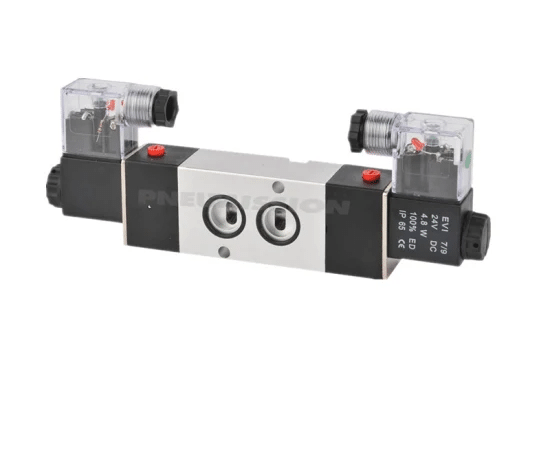
Solenoid valves use an electrical input to control pneumatic or fluid pathways.In pneumatic actuator systems, a solenoid valve can control the compressed air that moves the actuator.The control sequence may therefore be:PLC electrical signal → solenoid valve → pneumatic actuator → process valve movementSwitches International currently lists solenoid-valve products including the SV series for pneumatic applications.Recommended Products:Air Solenoids: https://switches.co.za/air-solenoids/SV Series Solenoid Valve: https://switches.co.za/product/sv-series-solenoid-valve/Solenoid valve configurations
Different pneumatic applications require different valve arrangements.Depending on the actuator and required behaviour, specifications may involve:- Number of ports
- Number of positions
- Normally open or normally closed behaviour
- Single or double solenoid operation
- Supply voltage
- Pressure range
- Flow capacity
Putting the system together
A simple automated valve system may contain:- PLC output
- Solenoid valve
- Pneumatic actuator
- Process valve
- Valve switchbox
- PLC feedback input
Common valve automation problems
Valve does not move
Possible areas to investigate include:- Loss of air supply
- Electrical control problem
- Solenoid problem
- Mechanical actuator issue
- Valve sticking
Valve moves but PLC does not see position
Check:- Switchbox
- Position sensors
- Alignment
- Wiring
- Connector
- PLC input
Valve moves in the wrong direction
Review:- Pneumatic routing
- Actuator configuration
- Solenoid arrangement
- Control logic
Valve does not reach commanded position
In modulating applications, investigate:- Positioner setup
- Air pressure
- Valve friction
- Actuator sizing
- Feedback calibration
Environment matters
Valve-control equipment is often installed in demanding areas.Consider:- Dust
- Moisture
- Outdoor exposure
- Washdown
- Vibration
- Temperature
- Corrosive atmospheres
- Hazardous-area requirements
Valve automation in South African industry
Automated valves are used throughout South African:- Manufacturing
- Mining
- Water systems
- Food and beverage
- Chemical processing
- Pulp and paper
- Power generation
- Process plants
- Valve switchboxes / brands and product range: https://switches.co.za/switches-products/
- ALS-200 Valve Switchbox: https://switches.co.za/product/als-200/
- EAE-3D Switchbox: https://www.switches.co.za/product/eae-3d-aluminium/
- Air Solenoids: https://switches.co.za/air-solenoids/
- SV Series Solenoid Valve: https://switches.co.za/product/sv-series-solenoid-valve/
- Limit Switches: https://switches.co.za/product-category/limit/
- Cable Connectors: https://switches.co.za/product-category/cable-connectors/
FAQs
What is the difference between a valve positioner and switchbox?
A positioner helps control the valve’s position, while a switchbox is commonly used to provide feedback confirming valve position.
What does a solenoid valve do?
In pneumatic valve automation, it can control the compressed air supplied to an actuator in response to an electrical control signal.
Why is valve position feedback important?
Feedback tells the control system whether the valve actually reached the requested position.
What details are needed when selecting valve automation components?
Useful information includes valve type, actuator type, air pressure, control voltage, required feedback, environment and control-system requirements.
Need help matching valve automation components?
Send Switches International your valve type, actuator information, control requirements, supply pressure and required feedback.