
Why this matters (and why it’s often misunderstood)
In industrial automation, not every problem needs a full PLC change, SCADA project, or complex integration. Sometimes the best solution is the simplest: a dedicated industrial display/controller that measures exactly what you need – reliably, repeatably, and with minimal engineering overhead.
That said, the terms counter, tachometer, and totaliser get thrown around interchangeably—often leading to incorrect specification. The result can be:
- displays that don’t read correctly (signal mismatch),
- counters that miss pulses,
- “rate” measurements that drift,
- or totalising logic that doesn’t reflect reality over time.
This guide explains what each device is, when to use it, what input signals you need, and how to avoid the common pitfalls – especially in packaging, manufacturing, process plants, and maintenance-driven upgrades.
1) The simplest way to choose: what question are you asking?
Start here. Your measurement category depends on your question:
- Counter: “How many?” (pieces, cycles, strokes, batches)
- Tachometer / Rate Meter: “How fast?” (RPM, speed, rate per minute)
- Totaliser / Integrator: “How much over time?” (total flow, accumulated usage, cumulative process variable)
When you pick the correct category, most of the specification becomes straightforward.
2) Industrial Counters: when you need “how many”
A counter tracks discrete events. It increments (or decrements) when it receives a pulse or a switch event.
Common counter applications
- Packaging lines: counting bottles, cartons, or product units
- Batch production: count to batch size then trigger a changeover
- Maintenance tracking: number of cycles/strokes for service intervals
- Scrap/reject tracking: count reject events per shift
- Machine utilisation: count operations to estimate throughput
Typical sensor inputs for counters
Counters are usually fed by “digital event” sources:
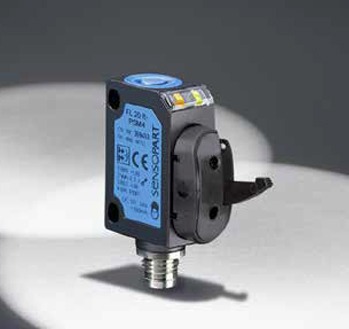
- Photoelectric sensors (great for fast moving products and non-metal targets)
https://switches.co.za/product-category/optical/ - Proximity sensors (ideal for detecting metal, and robust in harsh environments)
https://switches.co.za/product-category/proximity/ - Limit switches (mechanical position confirmation / end-of-travel counting)
https://switches.co.za/product-category/limit/ - Encoders (when you need counts per revolution, or precise positional pulses)
https://switches.co.za/product-category/rotary-encoders/
Key specification questions for a counter
- How fast are the events?
If the line is high-speed, you must ensure the device can handle the pulse frequency. A standard digital input can miss pulses if the frequency is too high or filtering is applied incorrectly. - Do you need reset, preset, or output relays?
Many counter applications need a preset threshold (e.g., stop at 100 units) and a relay output to drive a signal or alarm. - Do you need one-direction or up/down counting?
Up/down is common in certain movement or container management scenarios.
Common mistakes with counters (what causes “wrong counts”)
- Sensor placement too close to vibration points (double triggers)
- Wrong sensor type for the target (e.g., inductive trying to detect cardboard)
- Cable noise causing phantom pulses
- Inputs too slow (no high-speed capability)
- Over-filtering in the signal chain (missed pulses)
Tip: If you’re counting on a production line, place the sensor and mounting so that each product creates one clear, stable trigger – no bounce, no wobble, no vibration.
3) Tachometers / Rate Meters: when you need “how fast”
A tachometer displays speed (RPM) or rate (units per time). Instead of “how many events happened,” it calculates “how quickly events are happening.”
Typical tachometer/rate applications
- Conveyor speed monitoring (RPM or rate per minute)
- Motor monitoring (RPM for diagnostics and process control)
- Spindle speed verification
- Rate measurement for packaging or feeding systems
- Slip detection (unexpected speed deviations)
Common input sources for tachometers
- Speed sensors (magnetic pickup / speed sensing devices)
https://switches.co.za/product-category/speed/ - Rotary encoders (high-resolution pulses per revolution)
https://switches.co.za/product-category/rotary-encoders/ - In some scenarios: photoelectric sensors counting marks or holes at speed
https://switches.co.za/product-category/optical/
Where tachometers shine (and why they’re under-used)
A key advantage is early warning. RPM drift often indicates:
- belt slip,
- mechanical wear,
- motor issues,
- load changes,
- or upstream process faults.
Instead of waiting for a machine failure, you spot speed anomalies early and act before downtime occurs.
JR-D (6-Digits): a practical example for count/rate/RPM
If you need a compact panel solution for rate or RPM display, JR-D (6-Digits) is positioned as a counter/tachometer device and supports multiple input types – useful in a wide range of industrial measurement scenarios. https://switches.co.za/product/jr-d-6-digits/
Where this matters in real plants
- OEM panels where operators want local RPM feedback
- Maintenance technicians needing a stable speed indicator for troubleshooting
- Lines where a PLC exists but a local display avoids complex HMI changes
Tachometer specification checklist
- Input type compatibility (pulse type, voltage, encoder format)
- Expected speed range (minimum + maximum RPM)
- Required accuracy (is coarse speed OK, or do you need high resolution?)
- Display readability (distance and lighting conditions)
- Alarm or relay outputs (optional but valuable for process alarms)
4) Totalisers / Integrators: when you need “how much over time”
A totaliser accumulates a quantity over time. This is particularly relevant when your measurement is based on an analogue signal such as flow, level change, or rate of consumption.
Typical totaliser applications
- Flow totalising (total liters/m³ over a shift/day/week)
- Consumption tracking (air, water, chemicals)
- Batch totals in process plants
- Process integration where you accumulate a rate signal over time
Common input sources for totalisers
- Analogue signals: 4–20mA or 0–10V (depending on sensor/transmitter)
- Some flow applications also provide pulse outputs, but totalising analogue is common in process environments.
Kappa-M Dual Input: a practical example for dual analogue monitoring / integration
Where you need two analogue inputs and more advanced monitoring (including integration and arithmetic operations between inputs depending on configuration), Kappa-M Dual Input is positioned as a dual-input monitoring/controller device. https://switches.co.za/product/kappa-m-dual-input/
Why dual input matters
Dual inputs can help you:
- compare upstream vs downstream measurements,
- monitor two related variables at once,
- calculate differences/ratios (where supported),
- and improve process diagnostics without heavy PLC changes.
Totaliser specification checklist
- Confirm input type (4–20mA vs 0–10V)
- Confirm sensor range (e.g., 0–100 L/min)
- Define totalisation period (shift/day/week)
- Reset rules (manual, scheduled, or event-based)
- Units and decimal places (operator clarity prevents mistakes)
- Outputs / alarms (high total alarms, threshold warnings)
Common mistakes with totalisers
- Incorrect scaling (totalising the wrong engineering units)
- Noise on analogue loop (unstable totals)
- Wrong sampling/integration settings (over or under accumulation)
- Confusion between rate and total (operators reading the wrong value)
5) Counter vs Tachometer vs Totaliser: quick comparison table
Use this as a “go/no-go” selection guide.
Device type | Answers the question | Typical input | Best for | Common pitfall |
Counter | “How many?” | Digital pulses/events | counting units/cycles | double triggers / missed pulses |
Tachometer | “How fast?” | pulse/encoder/speed | RPM and rate monitoring | wrong input type / noisy signal |
Totaliser | “How much over time?” | analogue 4–20mA/0–10V or pulse | flow totals / consumption | scaling and integration errors |
6) The “inputs” issue: why most mistakes happen
Most incorrect installations come down to one problem: signal mismatch.
Three high-impact checks
- Is your sensor output digital or analogue?
- If digital, is it compatible (PNP/NPN or pulse type)?
- If pulse, is the frequency within what your device can count reliably?
If you’re unsure, it’s better to confirm compatibility up front than to troubleshoot after installation.
7) How to use these devices to reduce downtime (real-world examples)
Example A: Packaging line counting
- Problem: missed counts and inconsistent batching
- Fix: use a suitable optical sensor for clear triggers and stabilise mounting
- Suggested Products:
Optical sensors: https://switches.co.za/product-category/optical/
Proximity sensors: https://switches.co.za/product-category/proximity/
Example B: Conveyor speed drift and slip
- Problem: throughput fluctuates and faults occur downstream
- Fix: add speed monitoring via speed sensor/encoder and display RPM for maintenance
- Suggested Products:
Speed sensors: https://switches.co.za/product-category/speed/
Rotary encoders: https://switches.co.za/product-category/rotary-encoders/
JR-D: https://switches.co.za/product/jr-d-6-digits/
Example C: Process flow monitoring (totalised usage)
- Problem: untracked consumption creates cost and compliance issues
- Fix: implement totalising using analogue measurement inputs
- Suggested Products:
Flow air: https://switches.co.za/product-category/flow-air/
Flow liquid: https://switches.co.za/product-category/flow-liquid/
Kappa-M Dual Input: https://switches.co.za/product/kappa-m-dual-input/
Recommended products:
- Display/controllers: https://switches.co.za/product-category/electronic-display-controllers/
- JR-D (6-Digits): https://switches.co.za/product/jr-d-6-digits/
- Kappa-M Dual Input: https://switches.co.za/product/kappa-m-dual-input/
- Rotary encoders: https://switches.co.za/product-category/rotary-encoders/
- Speed sensors: https://switches.co.za/product-category/speed/
- Optical sensors: https://switches.co.za/product-category/optical/
- Proximity sensors: https://switches.co.za/product-category/proximity/
- Limit switches: https://switches.co.za/product-category/limit/
Request a Recommendation (Counter vs Tachometer vs Totaliser)
Send: your application + signal type (pulse / 4–20mA / 0–10V) + required output (count / RPM / total). We’ll recommend the correct device and supporting sensors.
Download the Measurement Selection Checklist
A quick guide to choosing the right device, input type, and setup for reliable operation.
FAQ
1) Can I use a counter to measure speed?
You can approximate speed by counting events over time, but a tachometer/rate meter is usually more accurate and stable, especially at variable speeds.
2) What’s the best way to measure conveyor speed?
Use a speed sensor or rotary encoder feeding a compatible input. For local display, a dedicated tachometer-capable panel meter can simplify diagnostics.
- Speed sensors: https://switches.co.za/product-category/speed/
- Encoders: https://switches.co.za/product-category/rotary-encoders/
- JR-D: https://switches.co.za/product/jr-d-6-digits/
3) When do I need a totaliser?
When you need an accumulated total over time – commonly flow totals, consumption tracking, or batch totals using analogue inputs (4–20mA/0–10V).
4) Why do counters miss pulses?
Most often: pulse frequency too high, poor wiring/shielding, noise from VFDs, or input filtering that blocks short pulses. Correct sensor selection, cable routing, and compatible inputs solve this.
5) Can a dual-input controller replace a PLC?
It depends on the complexity required. Dual-input controllers can be excellent for local monitoring, simple maths/compare functions, and totalising, but a PLC is better for multi-step sequences and broader system integration.
- Kappa-M Dual Input: https://switches.co.za/product/kappa-m-dual-input/
Pick the device that matches the question
Counters, tachometers, and totalisers solve different problems. If you start with the question – how many, how fast, or how much over time – you’ll choose the right device faster, reduce integration mistakes, and improve line reliability. For best results, match the input signal type correctly and build the installation for real industrial conditions (noise, vibration, washdowns).