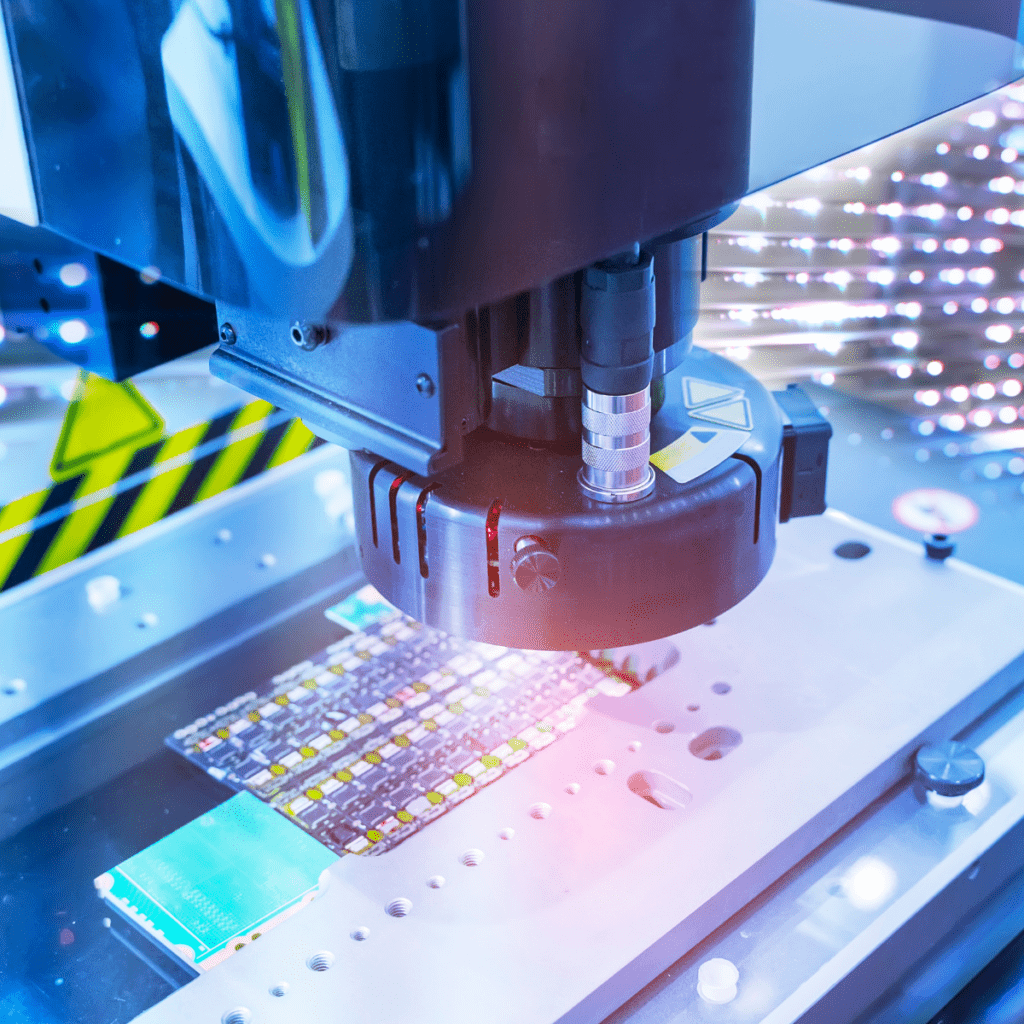

Industrial automation is changing rapidly, but for most manufacturing plants, mining operations, food and beverage facilities, packaging lines and OEM environments, the future will not arrive as one dramatic transformation. It will arrive through practical improvements: better sensor feedback, more reliable monitoring, improved data visibility, smarter maintenance planning and more connected equipment.
As South African industrial businesses prepare for 2027, the question is not only which technologies are emerging. The more useful question is: which sensor and automation improvements can help plants reduce downtime, improve visibility and make better operational decisions?
Sensors, switches, encoders, flow devices, pressure monitoring components and display controllers remain at the foundation of industrial automation. Even the most advanced PLC, HMI, SCADA or Industrial IoT system depends on reliable field-level input. If the data from the sensor is incorrect, unstable or poorly specified, the rest of the system cannot perform properly.
This article looks at practical sensor technology trends that are likely to shape industrial automation conversations in 2027.
1. More focus on smarter monitoring, not just smarter machines
One of the clearest trends is the move toward better monitoring. Many plants already have automated systems, but they do not always have enough visibility of what is happening inside those systems.
In 2027, more maintenance teams and operations managers are likely to focus on monitoring:
- Conveyor speed
- Shaft rotation
- Equipment cycles
- Pressure changes
- Flow interruptions
- Temperature variation
- Vibration changes
- Tank or process levels
- Production counts
- Machine run-time
This does not always require a full digital transformation project. In many cases, it starts with better use of sensors, switches and display controllers that help make process information easier to see and act on.
Recommended Products:
Speed Sensors: https://switches.co.za/product-category/speed/
Rotary Encoders: https://switches.co.za/product-category/rotary-encoders/
Electronic Display Controllers: https://switches.co.za/product-category/electronic-display-controllers/
2. Predictive maintenance will become more practical
Predictive maintenance is often discussed as a high-level Industry 4.0 concept, but its real value is practical. It helps maintenance teams detect changes before they become failures.
Instead of waiting for a component to fail, plants can use sensor feedback to monitor warning signs such as:
- Rising temperature
- Unusual vibration
- Speed variation
- Flow reduction
- Pressure instability
- Increased machine cycles
- Unexpected stops
- Inconsistent signal behaviour
For South African plants where unplanned downtime can affect production, delivery schedules and maintenance costs, this shift is important. Predictive maintenance does not have to begin with complex analytics. It can begin with identifying critical equipment and improving the quality of measurement around it.
Recommended Products:
Vibration Sensors/Switches: https://switches.co.za/product-category/vibration/
Temperature Sensors: https://switches.co.za/product-category/temperature/
Pressure/Vacuum Sensors & Switches: https://switches.co.za/product-category/pressure-vacuum-sensors-switches/
3. Local display and controller visibility will remain important
As factories become more connected, it may seem as if local displays are becoming less important. In reality, local display and controller devices continue to play a valuable role.
Operators and technicians often need to see information at the machine, not only in a central control room. A local counter, tachometer or process display can support faster troubleshooting and easier commissioning.
For example:
- A production line may need a local count display.
- A conveyor may need visible RPM or rate monitoring.
- A pump system may need local pressure and flow visibility.
- A process line may need two values monitored together.
- A maintenance team may need quick signal confirmation during fault-finding.
Products such as the JR-D 6-Digits and Kappa-M Dual Input can support this kind of practical visibility.
Recommended Products:
JR-D 6-Digits: https://switches.co.za/product/jr-d-6-digits/
Kappa-M Dual Input: https://switches.co.za/product/kappa-m-dual-input/
4. Harsh-environment reliability will become a stronger buying factor
In industries such as mining, food and beverage, packaging, manufacturing and process control, environmental conditions place significant pressure on automation components.
South African industrial environments may involve:
- Dust
- Moisture
- Washdowns
- Heat
- Vibration
- Outdoor exposure
- Chemical cleaning
- Mechanical impact
- Cable movement
- High production cycles
As automation systems become more important to uptime, selecting the correct IP rating, connector type and product construction becomes more critical.
The future of industrial sensing is not only about advanced data. It is also about reliability at the installation point. A smart system cannot compensate for a sensor that fails because it was not suited to the environment.
Recommended Products:
Proximity Sensors: https://switches.co.za/product-category/proximity/
Limit Switches: https://switches.co.za/product-category/limit/
Cable Connectors: https://switches.co.za/product-category/cable-connectors/
5. More demand for application-specific sensor selection
One-size-fits-all product selection will become less effective. As plants focus more on uptime and performance, buyers will increasingly need components selected for the exact application.
This means asking better questions before choosing a sensor:
- What material must be detected?
- Is the target metal or non-metal?
- What is the sensing distance?
- Is the environment dusty, wet or exposed?
- Is the application high speed?
- What PLC input type is required?
- Is the output digital or analogue?
- Is local display required?
- Are spares available?
- Is the connector suitable?
Switches International can support customers with technical recommendations, product matching and replacement guidance.
6. AI and automation content will influence buying decisions
Another major shift is how engineers, buyers and maintenance teams research products. More users are turning to AI-assisted search tools to ask technical questions before they contact a supplier.
Examples might include:
- “Which sensor should I use for a conveyor?”
- “What is the difference between proximity and photoelectric sensors?”
- “How do I choose a pressure sensor?”
- “What IP rating do I need for washdown?”
- “How do I monitor conveyor speed?”
This means educational content, FAQs, detailed research, selection guides and product comparison articles will become even more important to users before making a final decision.
What this means for South African industry
For South African manufacturers, mining operations, packaging plants, food and beverage producers and OEMs, the most important automation trends for 2027 are likely to be practical rather than theoretical.
The strongest opportunities include:
- Reducing downtime through better sensor selection
- Improving visibility of process values
- Building spares strategies for critical components
- Using more reliable IP-rated components in harsh environments
- Supporting predictive maintenance with better field-level data
- Improving local technical support and product matching
Automation growth depends on reliable components. The sensor, switch or connector at the machine level remains one of the most important parts of the system.
Recommended Products:
- Proximity Sensors: https://switches.co.za/product-category/proximity/
- Speed Sensors: https://switches.co.za/product-category/speed/
- Rotary Encoders: https://switches.co.za/product-category/rotary-encoders/
- Electronic Display Controllers: https://switches.co.za/product-category/electronic-display-controllers/
- Pressure/Vacuum Sensors & Switches: https://switches.co.za/product-category/pressure-vacuum-sensors-switches/
- Vibration Sensors/Switches: https://switches.co.za/product-category/vibration/
- JR-D 6-Digits: https://switches.co.za/product/jr-d-6-digits/
- Kappa-M Dual Input: https://switches.co.za/product/kappa-m-dual-input/
FAQs
What sensor technology trends are important for 2027?
Important trends include smarter monitoring, predictive maintenance, improved process visibility, harsh-environment reliability and better integration between sensors and control systems.
Will smart sensors replace standard industrial sensors?
Not in every application. Many plants will continue using standard industrial sensors, but with better integration, monitoring and selection practices.
Why is predictive maintenance important?
Predictive maintenance helps detect early warning signs before equipment failure occurs, reducing downtime and improving maintenance planning.
How can South African plants prepare for 2027 automation trends?
Start by improving sensor reliability, reviewing critical applications, adding monitoring where needed and selecting components suited to the actual environment.
Preparing your plant for better automation visibility in 2027?
Send Switches International your application details, operating environment and monitoring requirements. Our technical team can recommend suitable sensors, switches, display controllers and monitoring components for your system.
Request a future-ready sensor and automation recommendation today.