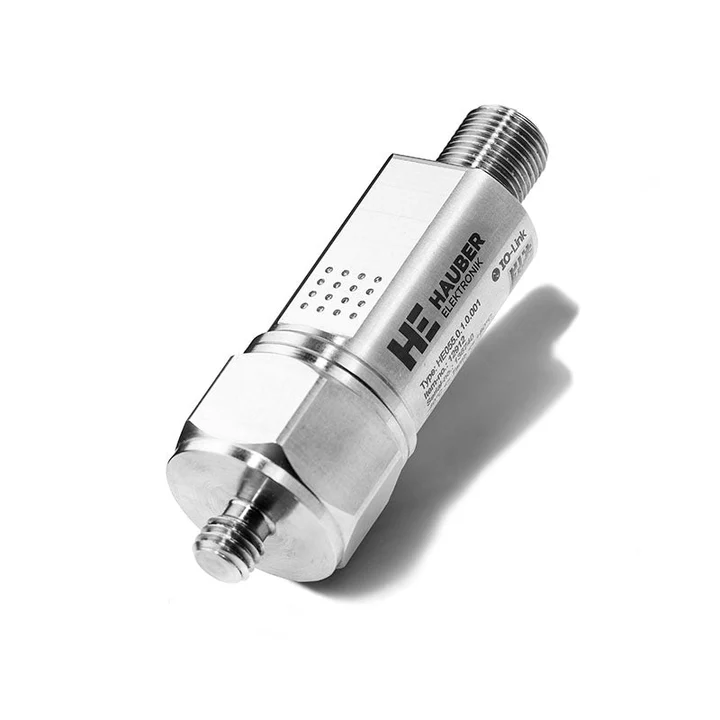

Industrial IoT is changing the way factories, plants and machines are monitored. More equipment is being connected to PLCs, HMIs, SCADA systems, cloud platforms and maintenance dashboards. This gives teams better visibility, but it also creates a new challenge: connected systems are only as reliable as the sensors and signals they depend on.
In industrial automation, sensors form the foundation of machine feedback. They detect products, confirm positions, monitor speed, measure pressure, track temperature, detect flow, indicate level and support safety-related machine functions. If a sensor is incorrectly selected, poorly installed or unreliable, the connected system may receive inaccurate or unstable information.
For South African manufacturers, mining operations, packaging lines, food and beverage producers, OEMs and process plants, Industrial IoT should not be seen only as a software or network conversation. It must also be seen as a field-level reliability conversation.
What does Industrial IoT mean in practical plant terms?
Industrial IoT refers to connecting industrial equipment, sensors and systems so that data can be collected, monitored and analysed. In practical terms, this may include:
- Monitoring machine run-time
- Tracking conveyor speed
- Recording temperature or pressure
- Monitoring vibration
- Detecting product counts
- Checking flow or level changes
- Sending alarms from equipment
- Supporting maintenance dashboards
- Analysing process trends
However, all of this depends on accurate field data. If the sensor signal is wrong, the dashboard is wrong. If the connector is unstable, the alarm may be unreliable. If the wrong sensor type is used, the system may produce false information.
Why sensor reliability is the foundation of connected automation
Before a plant invests in advanced monitoring, it should ensure that its field-level components are reliable. This includes sensors, switches, connectors, cables and signal devices.
A connected system may collect large amounts of data, but the value of that data depends on its accuracy.
Common sensor reliability problems include:
- False triggers
- Missed detections
- Signal noise
- Intermittent cable faults
- Moisture ingress
- Poor connector contact
- Incorrect output type
- Wrong sensing distance
- Poor mounting alignment
- Environmental damage
In a connected environment, these issues can create misleading trends, false alarms and poor decision-making.
Recommended Products:
Proximity Sensors: https://switches.co.za/product-category/proximity/
Optical Sensors: https://switches.co.za/product-category/optical/
Cable Connectors: https://switches.co.za/product-category/cable-connectors/
Monitoring signals vs control-critical signals
Not every signal has the same level of importance. Some sensors provide monitoring data. Others are part of machine control or safety-related functions.
For example:
- A temperature sensor may provide process monitoring.
- A proximity sensor may confirm machine position.
- A limit switch may confirm a guard or end-of-travel position.
- A speed sensor may support conveyor control.
- A pressure sensor may trigger an alarm or protection function.
Engineers must understand whether a signal is only for information or whether it affects control decisions. Where signals are control-critical, correct specification, wiring, installation and testing become even more important.
How poor sensor selection affects safety and uptime
Incorrect sensor selection can affect both safety and production reliability.
For example:
- A photoelectric sensor may fail if dust blocks the lens.
- A proximity sensor may not detect a non-metal target.
- A low IP-rated connector may fail after washdown.
- A speed signal may be unstable due to poor wiring near a motor.
- A limit switch may fail mechanically in a high-cycle application.
- An incorrectly matched output may not trigger the PLC input properly.
These problems can cause nuisance trips, production stops, missed detections or unreliable alarms.
In an Industrial IoT environment, the same issues may also create poor data quality. This can undermine maintenance planning and reduce trust in the system.
The role of connectors and installation quality
Connectors are often overlooked, but they are critical to sensor safety and reliability. A sensor may be correctly selected, but if the connector is loose, damaged or poorly sealed, the system can still fail.
Connector-related problems may include:
- Intermittent signal loss
- Water ingress
- Corrosion
- Damaged cable jackets
- Incorrect pinouts
- Cable strain
- Vibration-related faults
For connected automation systems, signal consistency matters. Good connector selection and cable routing help reduce false data and maintenance problems.
Recommended Product:
Cable Connectors: https://switches.co.za/product-category/cable-connectors/
Local displays in connected environments
Even in connected systems, local display and controller devices remain useful. A technician standing at a machine may need to confirm a count, rate, pressure, flow or speed value without opening a central dashboard.
Local displays can help with:
- Commissioning
- Troubleshooting
- Operator awareness
- Maintenance checks
- Signal confirmation
- Retrofit monitoring
- Standalone machine support
This is where electronic display controllers, JR-D 6-Digits and Kappa-M Dual Input can support practical visibility.
Recommended Products:
Electronic Display Controllers: https://switches.co.za/product-category/electronic-display-controllers/
JR-D 6-Digits: https://switches.co.za/product/jr-d-6-digits/
Kappa-M Dual Input: https://switches.co.za/product/kappa-m-dual-input/
Industrial IoT readiness checklist
Before connecting more equipment, engineers should check:
- Are sensors correctly selected for the target?
- Are outputs compatible with the PLC or monitoring system?
- Are cable connectors suitable for the environment?
- Are IP ratings appropriate?
- Is wiring protected from noise?
- Are sensor signals stable?
- Are critical signals tested regularly?
- Are spares available?
- Are product descriptions and wiring details documented?
- Can maintenance teams troubleshoot the signal locally?
This approach helps reduce the risk of building connected systems on unreliable field data.
Industrial IoT in South African environments
South African industrial environments often combine older equipment, newer automation systems and practical retrofit requirements. This means Industrial IoT adoption may happen in stages.
A plant may begin by monitoring critical conveyors, pump systems, compressors, temperature points or production counts. In these cases, reliable sensors and switches are essential.
For local operations in Gauteng, KwaZulu-Natal, the Western Cape and other industrial regions, the key challenge is often not whether data can be collected. The key challenge is whether the data is accurate, consistent and useful.
Recommended Products:
- Proximity Sensors: https://switches.co.za/product-category/proximity/
- Optical Sensors: https://switches.co.za/product-category/optical/
- Limit Switches: https://switches.co.za/product-category/limit/
- Cable Connectors: https://switches.co.za/product-category/cable-connectors/
- Electronic Display Controllers: https://switches.co.za/product-category/electronic-display-controllers/
- Speed Sensors: https://switches.co.za/product-category/speed/
- Pressure/Vacuum Sensors & Switches: https://switches.co.za/product-category/pressure-vacuum-sensors-switches/
FAQs
Why are sensors important in Industrial IoT?
Sensors provide the field-level data that Industrial IoT systems depend on. If sensor data is unreliable, connected monitoring and analytics will also be unreliable.
Can poor connectors affect IoT data quality?
Yes. Loose, damaged or poorly rated connectors can cause intermittent signals, false readings and unreliable monitoring.
Do connected systems still need local displays?
Yes. Local displays help operators and technicians see key values at the machine during commissioning, troubleshooting and maintenance.
How can Switches International help with Industrial IoT readiness?
Switches International can help recommend suitable sensors, switches, connectors and monitoring components based on the application and operating environment.
Building or upgrading a connected industrial monitoring system?
Send Switches International your sensor signals, environment, PLC or monitoring requirements and application details. Our team can help recommend reliable field-level components for connected automation.
Request an Industrial IoT-ready sensor recommendation today.