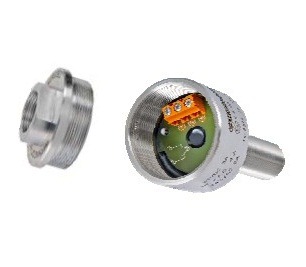

Proximity sensors are everywhere in automation – conveyor control, machine positioning, safety interlocks, material handling, packaging, robotics, and more. But choosing the right one for a specific application can be surprisingly tricky. Pick poorly, and you get false trips, early failures, or avoidable downtime; pick well, and the sensor quietly delivers reliable feedback for years.
Below is a straightforward process to help you narrow to the right proximity sensor before buying – plus two concrete product examples from trusted brands that Switches International supports.
Step 1) Define what you need to detect, and how close it will be
- What is the target material?
- Metal part, stainless steel, ferrous block, or non‑metal object?
- How close will it come to the sensor face?
- A few millimetres? Tens of millimetres? 1–2 cm?
This defines whether you need a very short sensing range vs. a longer-range device.
- A few millimetres? Tens of millimetres? 1–2 cm?
- Is contact allowed?
- Inductive or magnetic proximity sensors are non‑contact—ideal when you want to avoid wear, contamination, or mechanical stress.
- Do you need to sense only the presence/absence of an object, or also a specific position or event?
- Many proximity sensors give a clean digital on/off output, perfect for PLC logic.
- Tip: start with the actual physical application rather than the general product line. If the item to detect is a steel cam or plate, magnetic or ferrous‑target sensors are often ideal. If non‑ferrous items are used, inductive or capacitive variants may be better.
Step 2) Check environment and protection needs
Industrial floors and plants expose sensors to:
- Dust, moisture, wash‑down, or humidity
- Vibration and impact
- Temperature swings
- Hazardous areas or corrosive atmospheres
Look for sealed, rugged housings and high ingress protection.
Example guidance from Switches International’s documentation on one series shows IP68 protection and robust construction for extreme conditions – suitable, for instance, where moisture or heavy ingress could occur.
When the environment is harsh, prefer devices with:
- Stainless steel housings, or other robust metals
- Certified sealing, e.g., IP67/IP68 or better
- Proven track record for long life in dirty or wet zones
Step 3) Decide the sensing principle best suited to your target
Below are common principles and where they shine:
A) Magnetic or ferrous‑target proximity
Detects ferrous metal using an external magnet or magnetic actuation.
Often very robust, with tight physical tolerance and high reliability in industrial use.
Good for:
Detecting steel or stainless items at short range
Harsh or hazardous locations where ruggedness matters
B) Inductive proximity
Senses metallic objects (sometimes non‑ferrous within certain limits)
Common in manufacturing lines where speed and frequent switching are required
Good for:
Conveyors, robotics, and part detection where metal objects vary but are present
C) Capacitive or other non‑contact methods
Can detect non‑metal objects, plastics, or even liquids in some cases
Useful where metal is not present, but object presence still needs detection
Good for:
Packaging lines, level detection of non‑metal items, or parts with mixed materials
Step 4) Check electrical and safety requirements
- Output type
- SPDT / SPCO contacts, normally open or normally closed, or other logic.
For many PLC systems, a simple change‑over contact is sufficient.
- SPDT / SPCO contacts, normally open or normally closed, or other logic.
- Voltage and current ratings
- Ensure the sensor’s contacts can handle the planned control circuit or relay.
- Safety or hazardous‑area approval
- If used in explosive atmospheres or critical safety loops, verify approvals or SIL capabilities.
- Failure modes and diagnostics
- Some series or brands offer design variants for intrinsic safety, explosion‑proof housings, or higher‑integrity safety usage.
Step 5) Confirm mounting, size and installation constraints
- Thread size and mounting geometry
- Does the sensor mount easily where you need it—on an M12 or M18 threaded bracket, for example?
- Cable entry or junction head
- Choose a configuration that matches conduit or wiring needs, or supports space‑limited installations.
- Actuator or magnet options
- Some magnetic sensors rely on external magnetic actuators; confirm that the actuator type and spacing are practical for your application.
Step 6) Validate cycle life and maintenance expectations
Long production runs or continuous operation demand sensors that survive millions of cycles without drift or failure:
Look for series with proven high mechanical life or robust contact materials.
Prioritise designs that minimise wear and resist ingress from dust or liquids; such designs reduce servicing and replacement frequency.
Step 7) Pick a concrete model or family and test it
After narrowing down by target, environment, electrical needs, and mounting, select a specific product family and perform a small trial installation in your plant. This test – often on a single machine or conveyor—reveals practical issues like alignment, false triggers, or wiring simplifications, before you deploy across multiple lines.
Two solid examples to consider from reputable brands
Below are two real product families that fit many tough industrial needs, particularly when detecting ferrous material or working in demanding environments. Both are tied to Switches International’s supply and documentation.
1) A heavy‑duty ferrous‑target proximity family
Euroswitch FS-A Ferro Sensing Proximity Switch
Why this family is useful
- Designed for arduous, hazardous applications. The Euroswitch ferro sensing units are meant for tough conditions where dependable sealing and material robustness matter. The product page notes their role in demanding situations with sealed construction for industrial use.
- Ferrous‑target detection method. Ideal when the part to sense is steel or stainless – very common in conveyors, machine guards, or metal fabrication lines.
Strong, compact stainless bodies that can be installed in tight locations, often with integrated junction or conduit options.
Use cases
- Conveyor end‑position detection on steel inserts
- Guard door position sensing using magnetic actuators
Heavy machinery cycle detection where dust, vibration, or moisture is present
Tradeoffs / things to check
- Shorter sensing range compared to some inductive or capacitive sensors; that is usually acceptable for precise mechanical locations but must be confirmed for each application.
- Magnetic actuator planning may require coordination with the detected part or mounting hardware.
Best fit
- Harsh zones, high‑cycle operations, metal‑heavy environments, and where a robust mechanical detection is needed more than ultra‑long sensing distance.
2) A widely‑applicable industrial proximity series for rugged environments
Euroswitch ES-3 / ES-3000 Proximity Switch Series
Why this family is useful
- Proven, sealed design from a long‑standing industrial brand—suitable for harsh environments where ingress or mechanical challenges exist.
- The ES‑series documentation emphasises rugged, hermetically sealed capability and long‑term reliability, making it a safe starting choice for many installations.
- Multiple variants and approvals allow fine‑tuning to safety, environmental or electrical requirements.
Use cases
- Position detection on critical safety interlocks
- Contactless machine cycle monitoring in dusty or wet areas
- General industrial use where a dependable SPDT‑style output is required
Tradeoffs / things to check
- Variant selection needed. Ensure the exact ES‑series variant matches the environment (temperature range, approvals, and wiring). Some variants have specific cable or potting arrangements.
- Installation space and access. While compact, ensure the mounting thread, head or conduit options match the local wiring practice.
Best fit
- Applications where long life, field-proven sealing, and industrial robustness are top priorities – across conveyors, packaging, metals, mining support systems, and more.
Step 8) Confirm support, spares, and local supply
Choose brands and series that local distributors or suppliers can support quickly, including stock of spares and accessories.
Verify whether replacement actuators, cables, or mounting hardware are easy to source.
Confirm that technical support or guidance is available from the supplier, especially for tricky installations in hazardous or hard‑to‑reach locations.
Step 9) Document your choice and installation plan
Before rolling out across multiple machines:
- Specify the sensor variant, mount type, wiring and labeling in a small guide.
Note the exact distance to target, operating temperature, expected dust or wash‑down, and PLC input logic. - Use a short checklist for installers to verify alignment, gap to target, and wiring polarity or contact configuration.
This avoids accidental mismatches that can lead to false alarms or downtime later.
Choosing the right proximity sensor isn’t guesswork – it’s a structured decision:
- Understand target and distance.
- Test environmental exposure and protection needs.
- Pick the sensing principle carefully.
- Verify electrical and safety specs.
- Ensure mount, size, and maintenance are realistic.
Trial a specific product family before scaling.
The Euroswitch FS‑A or EuroSwitch ES‑3/ES‑3000 families above are strong, field‑proven starting points from reputable brands, supported by Switches International. They illustrate how careful selection – aligned to your exact application – delivers durable, low‑maintenance, accurate sensing that keeps automation lines running smoothly.
#ProximitySensors #IndustrialAutomation #MachineSafety #FactoryAutomation #Euroswitch #SwitchesInternational